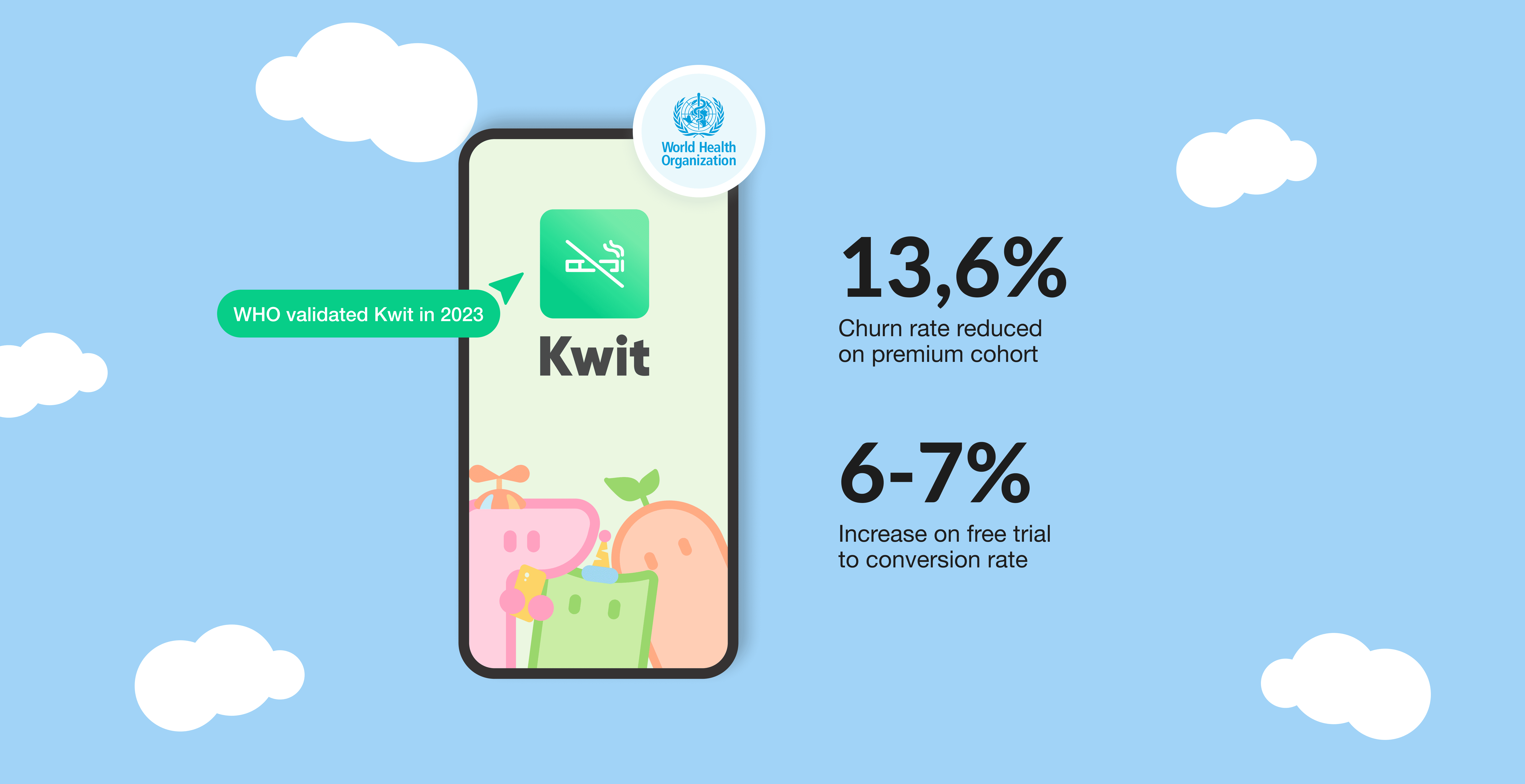
Kwit’s app is a global wellness tool, helping over 3 million users build healthier habits by quitting smoking. The app is freemium, with premium users seeking extra support during the hardest early weeks. The ultimate goal: keep users smoke-free while giving premium subscribers the guidance they need to succeed.
Impact
Double-digit increase in premium retention.
13,6% Churn reduction from premium to free.
Day-1 activation increased.
6-7% increase from free to trial.
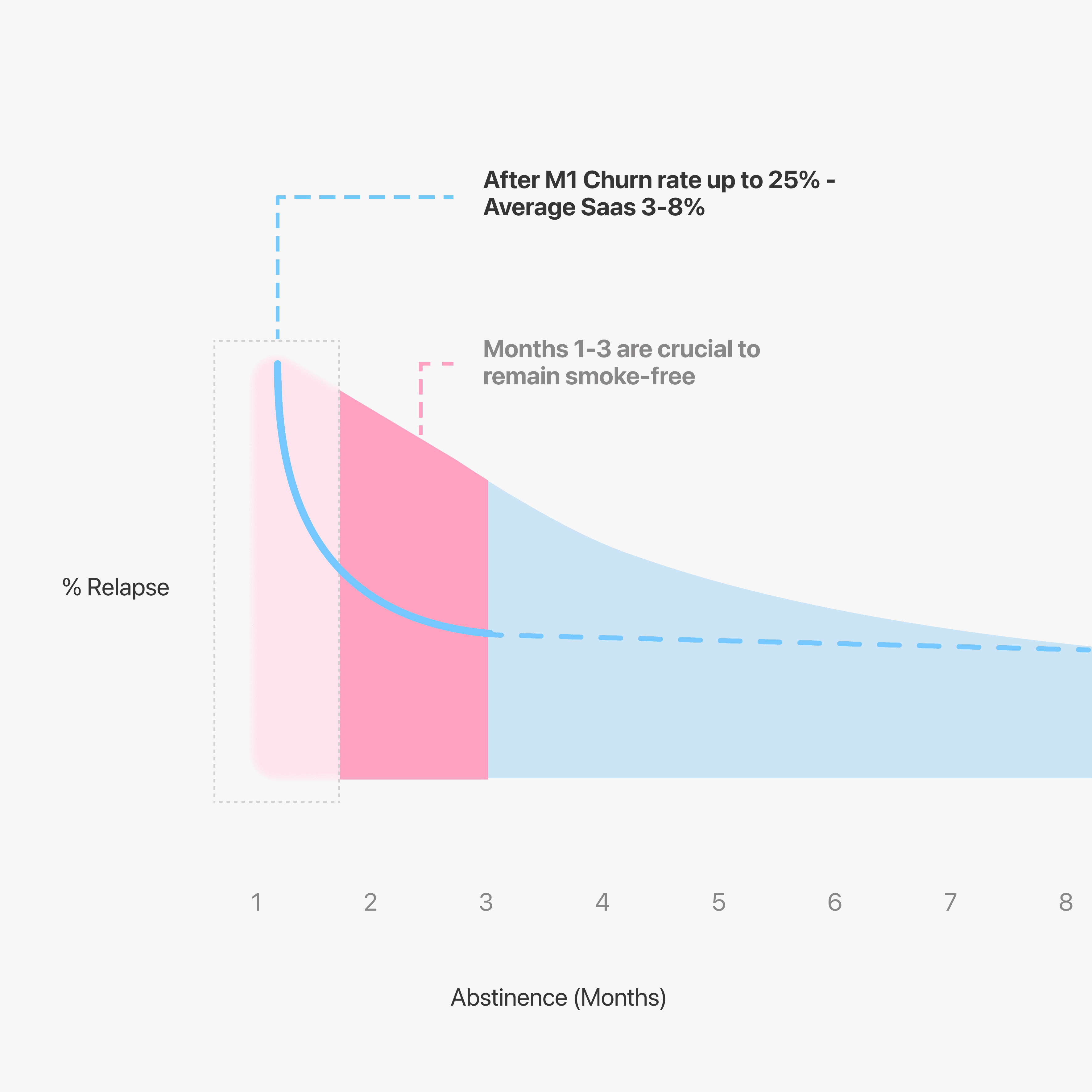
Users' guidance extended through the critical early quitting period - first 1 to 3 months - improving number of positive reviews in apple and google play store.
Premium at Kwit was meant for the people who needed the most support — the ones for whom quitting smoking was hardest in the first weeks. Over time, though, the line between free and premium blurred, and guidance stopped too early, leaving even these users at risk of losing momentum.
Opportunity space
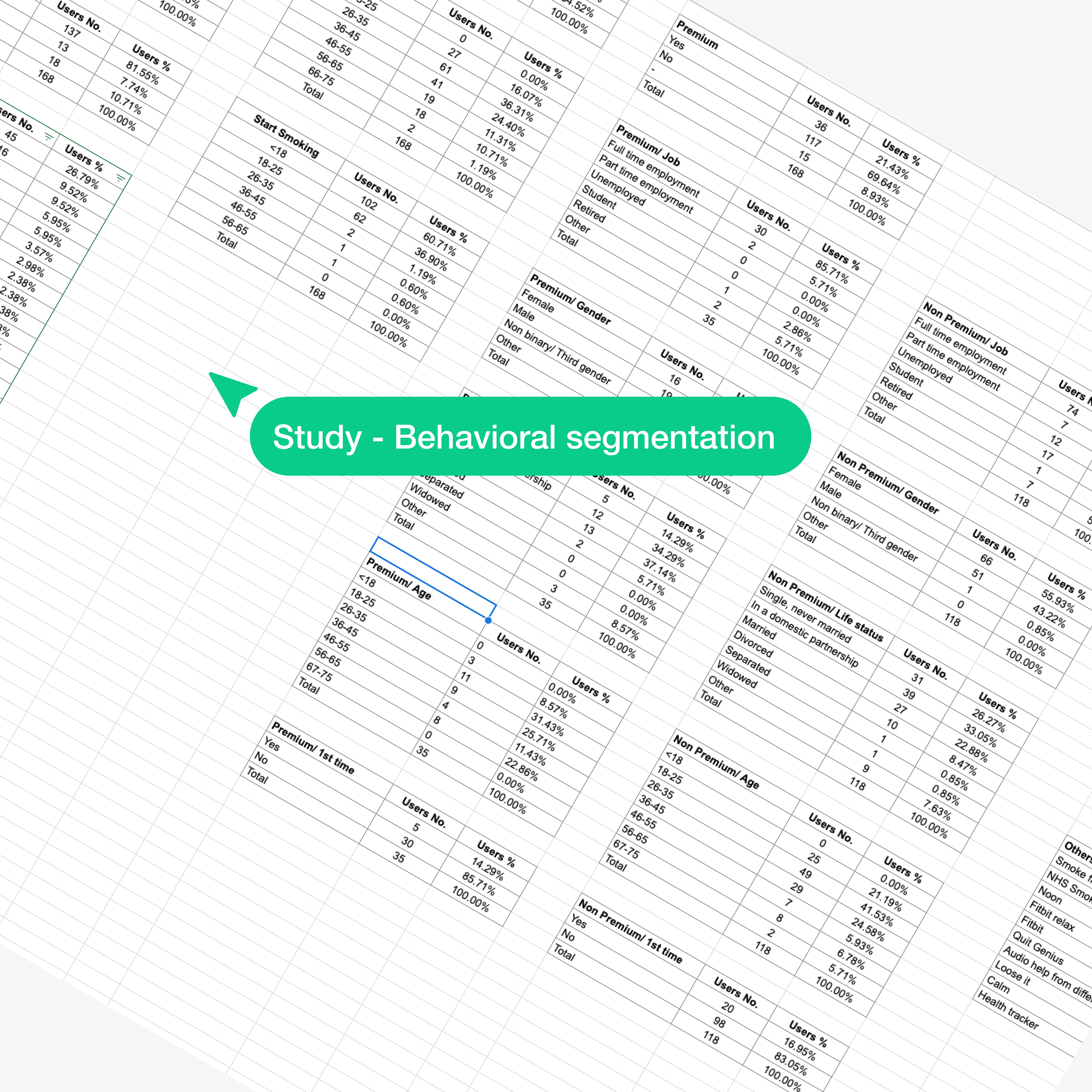
We started with the users themselves — who subscribes to premium, why they need help, and where the experience breaks down. Behavioral segmentation, qualitative interviews, and subscription funnel analysis revealed the patterns that shaped every decision.
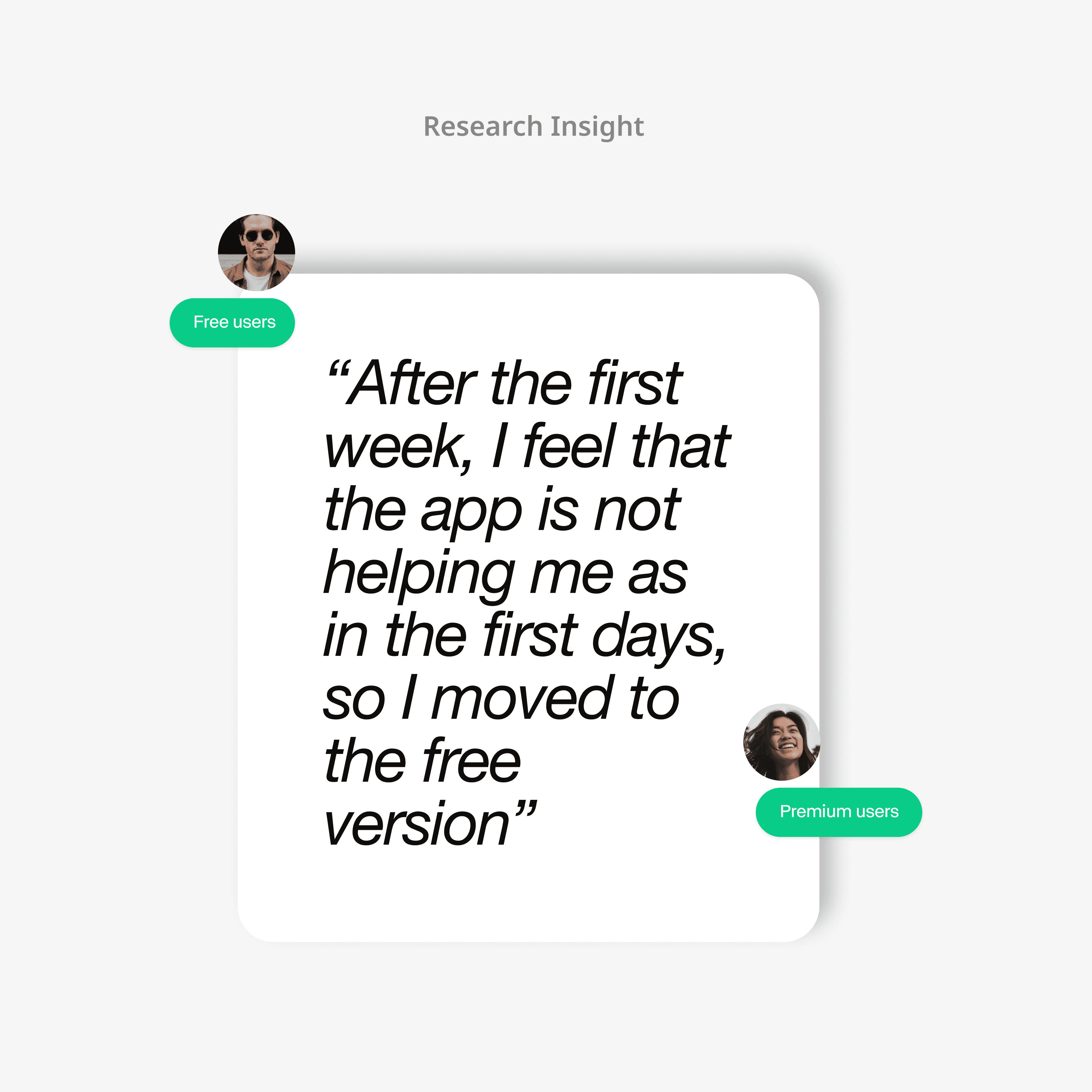
Through qualitative research, behavioral analysis, and funnel deep-dives, I uncovered a clear pattern: users weren’t leaving because they didn’t need help, but because the product wasn’t supporting them when they needed it most.
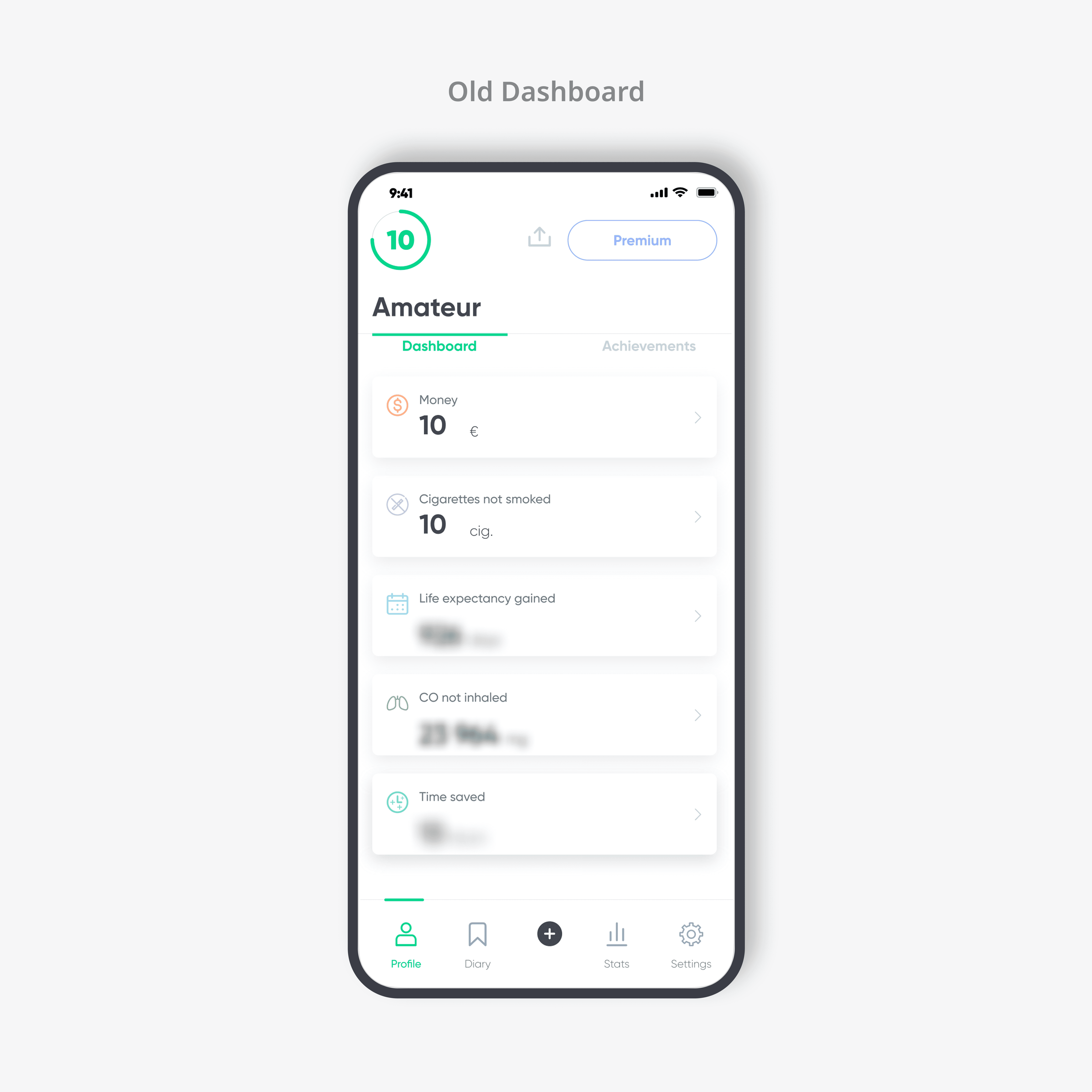
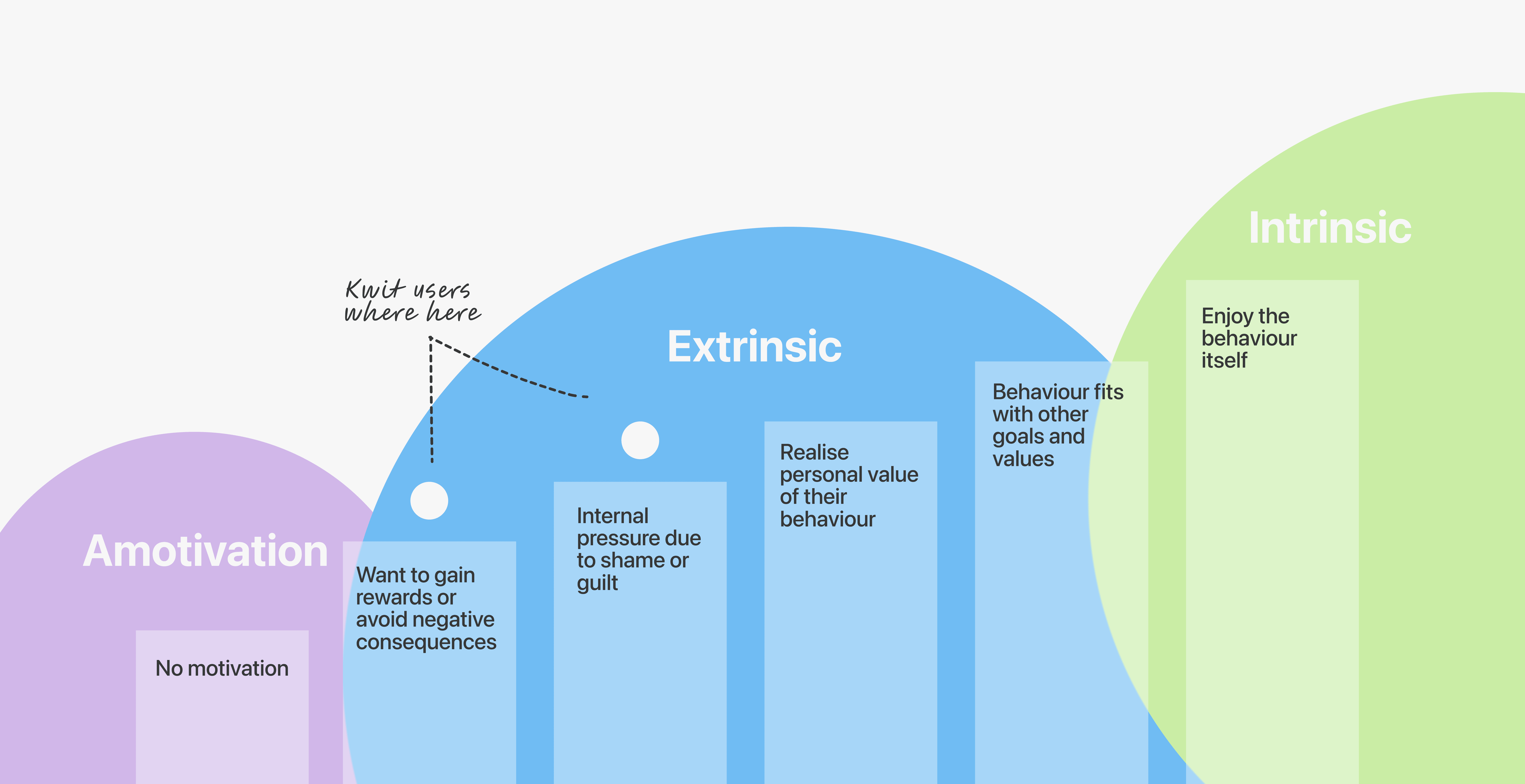
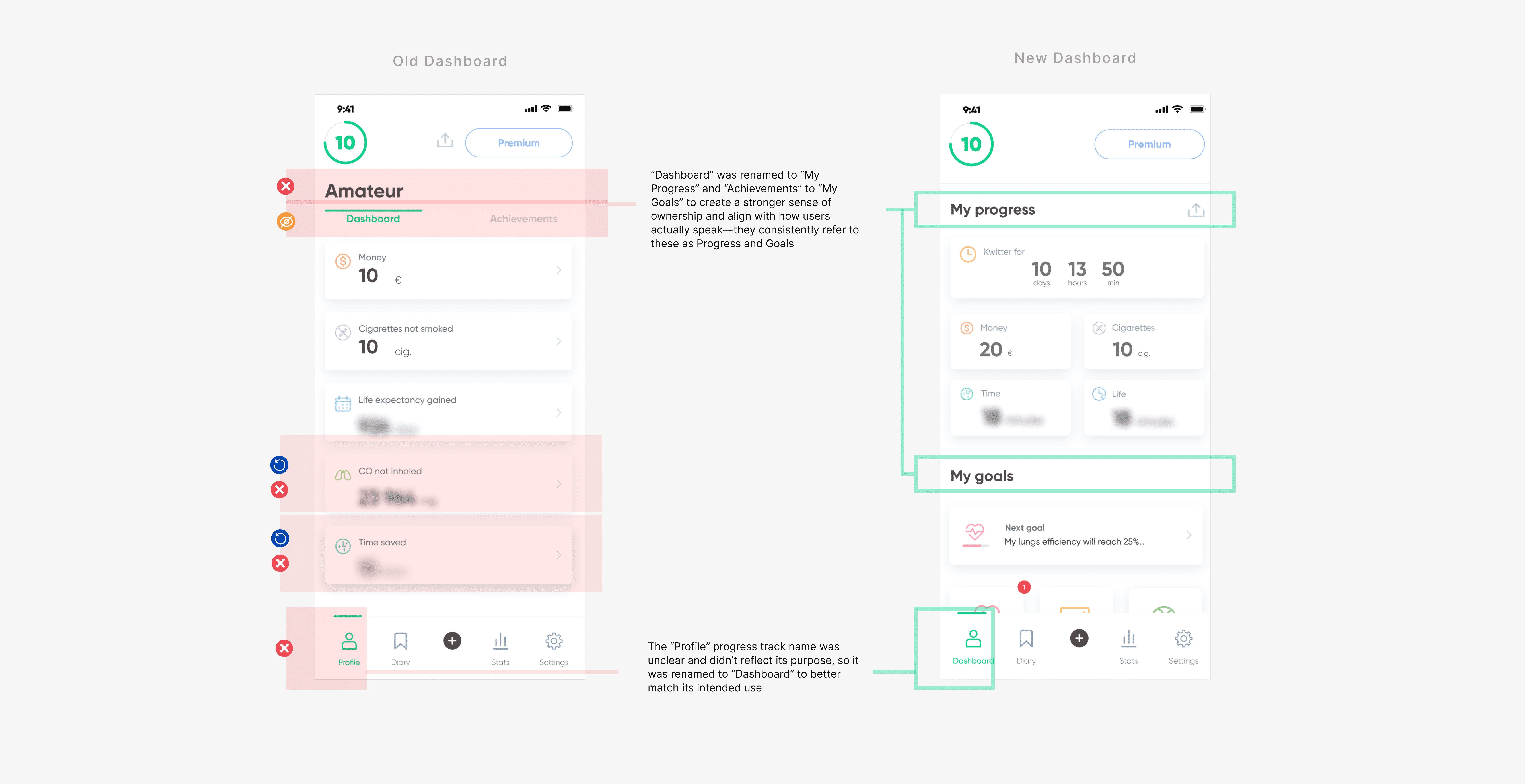
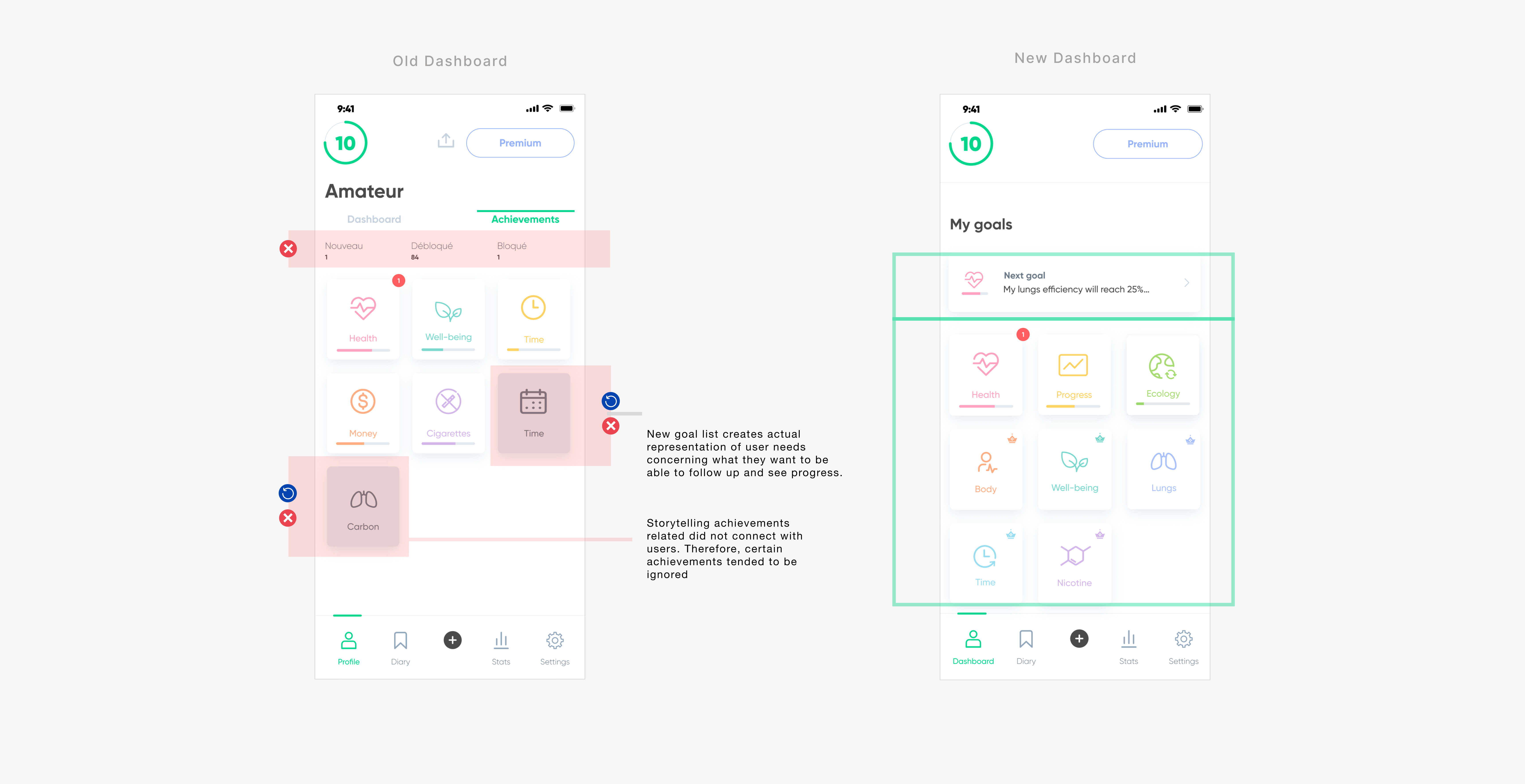
The Dashboard — the core of the experience — was reimagined as a central hub for progress and motivation. Information architecture was simplified to reduce friction and surface what matters. The gamification layer was rebuilt to better reflect real progress over time, expanding goals and reinforcing intrinsic motivation. At the same time, UX writing was aligned with how users naturally describe their journey, making the experience more relatable and meaningful.
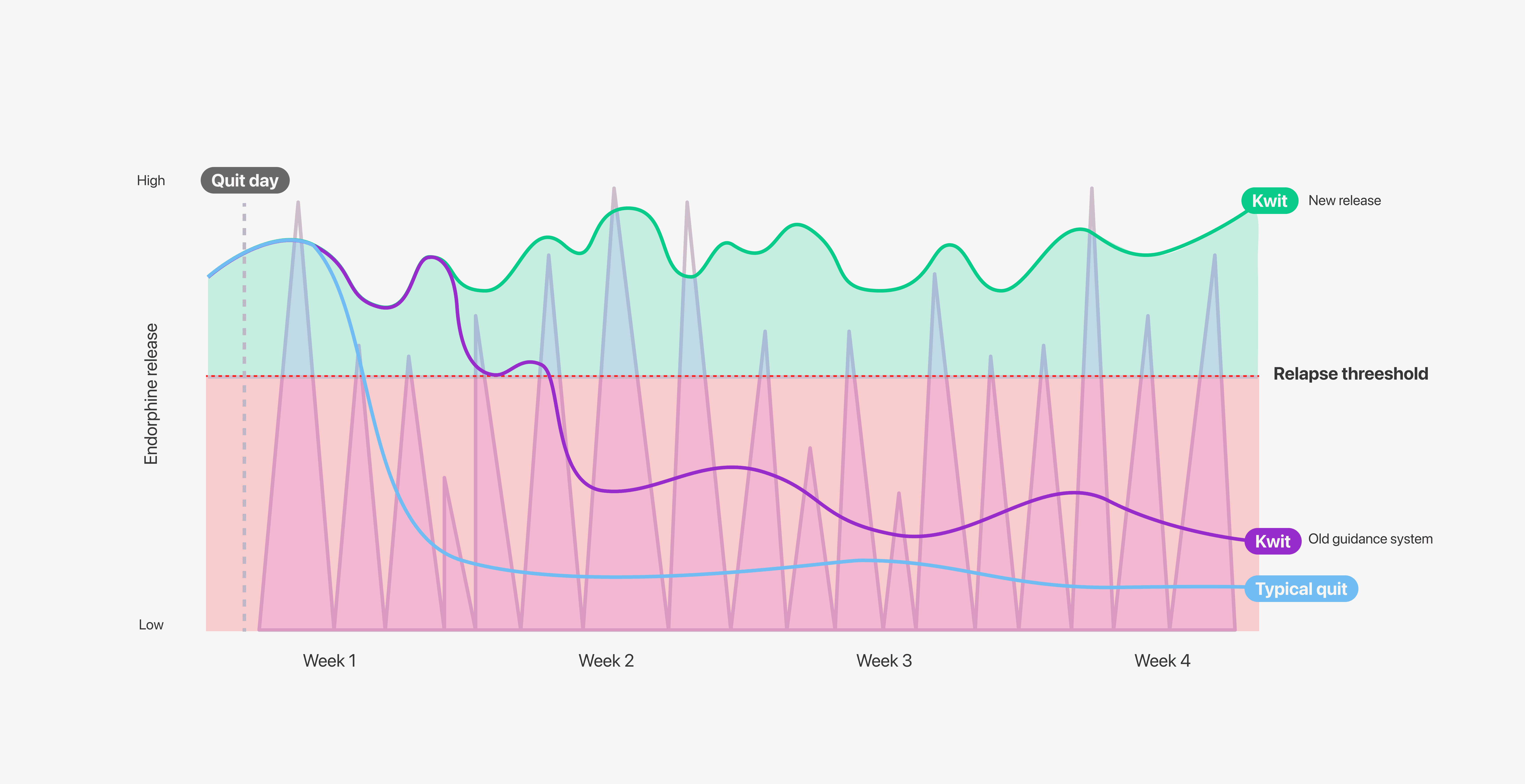
Most importantly, guidance was extended beyond the early days, ensuring premium users continued to receive relevant support through the hardest stages of quitting.


Trade-offs
Extending guidance and enriching the Dashboard meant adding more content and interactions. The challenge was to support users without overwhelming them — balancing simplicity with depth, and deciding what to show and when.
We also shifted focus from short-term conversion to long-term retention. Some decisions prioritized sustained engagement over immediate subscription gains, reinforcing value over time rather than upfront.
Expanding guidance and gamification introduced the need for personalization at scale. We had to balance tailored experiences with a system that remained clear, consistent, and maintainable.
Finally, strengthening premium value had to be done without harming trust. The goal wasn’t to limit the free experience, but to make premium feel genuinely supportive and worth it.